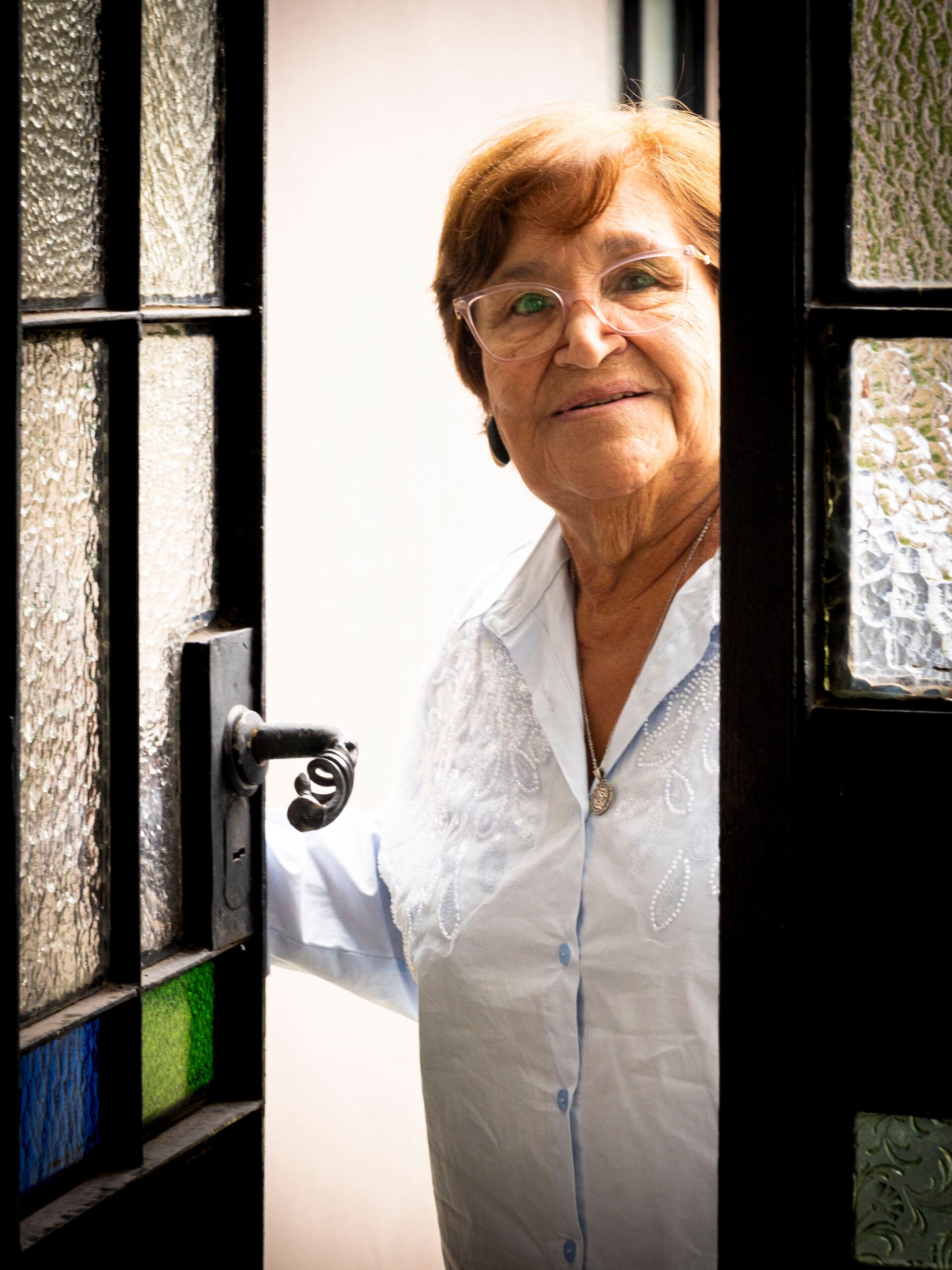
A personal alarm for an older person is a button worn as a pendant or wristband that connects to a monitoring centre open 24 hours a day. When it is pressed, a call handler speaks to them through a base unit and contacts a family responder or the emergency services. Fall-alarm versions can raise the alert automatically after a hard fall, but no fall detector catches every fall. In the UK they are offered by charities, councils and private companies, typically for about £18 to £38 a month in 2026.
Updated 26 October 2026 · Sources: NHS, GOV.UK (Telecare National Action Plan), Age UK, Coventry City Council, North Northamptonshire Council, the TEC Services Association, Relay UK and PSNI (first checked 15 October 2026; prices, Age UK, councils and GOV.UK re-checked 23 October 2026; police-contact section re-checked 26 October 2026; monthly and first-year totals are our own arithmetic). We make Safety App UK; it is not a care alarm and is listed below only for comparison.
The NHS says to call 999 if someone has fallen and may have hurt their head, neck, back or hip, or cannot get up. Keep them warm and comfortable and don’t try to lift them yourself. If you can’t speak on the call, see how to make a silent 999 call.
What is a personal alarm for elderly people?
A personal alarm (also called a pendant alarm, lifeline or telecare alarm) is a monitored service, not just a gadget. The Telecare National Action Plan published by GOV.UK in February 2025 describes telecare as two parts: a device the person wears or carries, and an alarm receiving centre staffed by call handlers who respond when help is needed. GOV.UK estimates that around 2 million people in the UK use telecare. It is different from a loud personal attack alarm, which only makes a noise.
What are telecare alarms?
Telecare alarms are monitored alarms and sensors that let someone call for help from home. GOV.UK describes telecare as an end-to-end monitored service: a device the person wears or carries, plus an alarm receiving centre staffed by call handlers. A package can go beyond a pendant: Coventry City Council, for example, includes a smoke detector if needed and says extra sensors need an assessment by a health or social care professional.
How does a pendant alarm call work?
Most home alarms follow the same five steps. Details vary by provider, so ask yours exactly who answers and who comes out.
1. The button is pressed, or a fall is detected
2. The base unit calls the monitoring centre
3. A call handler talks to them
4. They call a responder or 999
5. Someone gets in
Steps based on Age UK, North Northamptonshire Council and Coventry City Council service pages, checked 15 October 2026.
Is there a personal alarm that contacts the police?
Not directly: a personal alarm for an older person calls a 24-hour monitoring centre, not the police. When the button is pressed, a call handler talks to the person and decides who to ring; Age UK says its centre chooses “whether to call your chosen contacts or the emergency services” (checked 26 October 2026). The closest thing to an alarm that reaches the police is a lone worker device certified to BS 8484: the provider’s alarm receiving centre holds a police unique reference number (URN) and can escalate a verified alert to the police. Those devices are supplied by employers to staff, not sold as home care alarms; see our guide to lone worker safety apps.
To reach the police yourself when you can’t speak, the official routes are a silent 999 call (press 55 on a mobile when the operator prompts you) or emergencySMS, which only works once you have texted “register” to 999: see how to register for emergencySMS. A phone or smartwatch with Emergency SOS calls 999 straight away. Safety App UK, which we make, alerts a trusted circle and does not call the emergency services. Green ▲ = yes, amber ▬ = sometimes, red ✕ = no.
Checked 19 October 2026 on Age UK and GOV.UK pages; watch and phone details from our Emergency SOS guide. Noise alarms are covered in personal alarms and rape alarms.
Do fall detector pendants detect every fall?
No. Fall alarms are designed to spot hard or severe falls. Age UK says its Digital Fall Alarm “cannot guarantee to detect all falls” and advises pressing the button if you can; North Northamptonshire Council says softer falls may not be detected. A fall detector adds a safety net for someone who might be knocked out or unable to reach the button, but it should never replace pressing it.
What is a digital fall alarm?
A digital fall alarm is a pendant that works with a digital base unit, usually on a mobile SIM rather than a landline, and raises an alert by itself if it senses a hard fall. Age UK’s Digital Fall Alarm, for example, uses a motion algorithm to tell a hard fall from normal movement, works up to 300 metres from the base unit and still has a button, because it “cannot guarantee to detect all falls”.
Is there a pendant alarm that works outside the home?
Yes. A GPS or mobile alarm has its own SIM, so it works wherever there is mobile coverage, not only near a base unit. Age UK’s Taking Care Anywhere package, for example, uses a location-aware GPS pendant on 3G or 4G networks; you speak to the operator through the pendant and the battery lasts 1 to 2 months. It costs £31.49 a month plus VAT (£37.79 with VAT), checked 23 October 2026. A smartwatch with fall detection or a phone with Emergency SOS are other options away from home.
How much does a personal alarm cost in the UK?
A personal alarm for an elderly person in the UK typically costs about £18 to £38 a month in 2026, depending on the provider and the package. In our examples checked on 23 October 2026, Coventry City Council’s basic TeleCareline is £4.20 a week (about £18.20 a month, our own arithmetic), North Northamptonshire Council’s Lifeline starts at £28.17 a month, and Age UK’s Digital Personal Alarm is £29.39 a month with VAT plus a set-up fee. Fall detection and GPS cost more.
Age UK says VAT exemption may apply if the user is chronically sick, registered disabled or needs regular medication; key safes are not VAT-exempt. These are examples, not a ranking: compare what is included before you sign up.
Prices from Age UK, Coventry City Council and North Northamptonshire Council service pages, checked 23 October 2026. “About per month” for weekly charges = weekly price × 52 ÷ 12; “first year” = 12 months plus any set-up fee, before VAT exemption or Age UK’s annual-payment discount (our own arithmetic). Council prices apply only to residents of that council area.
How much is an Age UK personal alarm?
An Age UK Digital Personal Alarm costs £24.49 a month plus VAT (£29.39 with VAT) and a one-off set-up fee of £69.99 plus VAT (£83.99), as listed on 23 October 2026. The Digital Fall Alarm is £28.49 a month plus VAT (£34.19), and the GPS Taking Care Anywhere package is £31.49 plus VAT (£37.79). Age UK’s alarms are supplied by its trading arm with Taking Care, are self-installed, have no long-term contract and come with a 30-day money-back guarantee. A key safe is £49.99 and a second pendant for a partner costs extra each month.
Can you get a personal alarm from the council?
Many councils in England, Scotland and Wales run or list a lifeline or telecare service, usually through adult social care. Contact your local council or search its website for “lifeline” or “telecare”; our step-by-step guide to getting a council telecare alarm explains the needs assessment, self-referral and typical charges. Coventry City Council, for example, says people already receiving care and support are charged according to a financial assessment, and extra sensors need an assessment by a health or social care professional. Friends, family and health professionals can often make the referral.
What is a Lifeline alarm?
A Lifeline alarm is the name many UK councils use for their own monitored pendant alarm service: a base unit in the home plus a button worn as a pendant or wristband, linked to a 24-hour control centre. North Northamptonshire Council’s Lifeline, for example, starts at £28.17 a month including set-up, equipment and maintenance, and asks for local contacts who can get into the home in an emergency. Coventry’s TeleCareline package is built around a “Lifeline alarm unit” with a personal trigger. In practice a Lifeline, a pendant alarm and a telecare alarm are the same kind of service; the difference is who runs it and what it costs.
Will a personal alarm still work after the switch to digital landlines?
Older alarms that plug into an analogue landline may not work once the line is moved to digital. GOV.UK says most lines are expected to move by the end of January 2027 and urges telecare users and families to tell their landline provider that they have an alarm; BT and Virgin Media customers can call 150 from the home phone. Ofcom requires a free backup for people who rely on their landline, but GOV.UK warns this does not guarantee the alarm keeps working in a power cut, so ask the alarm provider too. Many newer alarms, including Age UK’s digital ones, use a mobile SIM instead of a landline.
Pendant alarm, fall detector, smartwatch or phone: which is better?
A monitored pendant suits someone who is mostly at home and may not manage a phone in an emergency. A GPS alarm or a smartwatch suits someone who goes out alone. Green ▲ = yes, amber ▬ = partly or only on some models, red ✕ = no. We make Safety App UK and have not ranked the options.
Checked 15 October 2026 on Age UK, council and GOV.UK pages. Watch details are in our fall detection watch guide; phone set-up is in our Emergency SOS guide.
What should an older person do after a fall?
The NHS advice is to stay calm and take a couple of minutes to check for pain or injuries. If you can’t get up, use a phone or personal alarm if you can reach it, or call out or bang on the wall or floor. Cover yourself with anything nearby to keep warm, gently move your arms and legs, and change position about every 30 minutes to help prevent pressure sores. Emergency information on the phone’s lock screen also helps responders: see ICE contacts and Medical ID.
What should you check before choosing a personal alarm?
- Who answers the call, and is the centre open 24 hours a day?
- Who will come out: named keyholders, a mobile responder, or only 999?
- Does it need a landline, and what happens in a power cut?
- Is there a fall detector, and is the person happy to wear it all day?
- What is the full cost: set-up, monthly or weekly fee, extra sensors, key safe, and can you cancel any time?
- Is the service certified? The TEC Services Association (TSA), the industry body for technology-enabled care, runs a Quality Standards Framework, so ask whether the provider is certified.
Older people are also targeted by doorstep sellers: never sign up for an alarm on the doorstep. See our guide to doorstep scams and rogue traders. If you are helping a parent choose a new home, you can check recorded crime near the address with the postcode checker on safety-app.uk.
Myths and facts about personal alarms
Frequently asked questions
The one they will actually wear. A monitored pendant suits someone mostly at home; add a fall detector if they might not be able to press the button; choose a GPS alarm or smartwatch if they go out alone.
Not automatically. Most charge a weekly or monthly fee: in our October 2026 examples, from £4.20 a week for a basic council alarm in Coventry to £37.79 a month for Age UK’s GPS alarm. Some councils charge people who already receive care and support according to a financial assessment, so ask your council’s adult social care team.
Not directly. Home pendant and fall alarms call a 24-hour monitoring centre, which contacts family or the emergency services when needed (Age UK, checked October 2026). To reach the police without speaking, make a silent 999 call and press 55 on a mobile, or register for emergencySMS by texting “register” to 999.
A standard pendant works only near its base unit, around the home and garden. For walks and trips you need a GPS alarm with mobile coverage, a smartwatch or a phone with Emergency SOS.
No. We make it for people out and about: it shares live location and video with a trusted circle and has no fall detection or monitoring centre. It does not call the emergency services.
Sources
- NHS: falls
- GOV.UK: Telecare National Action Plan
- GOV.UK: telecare users urged to speak to telecoms providers
- Age UK: personal alarms
- Coventry City Council: telecare charges
- North Northamptonshire Council: Lifeline
- TEC Services Association (TSA)
- Relay UK: contact 999 and register for emergencySMS
- PSNI: lone worker unique reference number (URN) application, 2025
General information, checked 15 October 2026 and updated 26 October 2026. Prices and services change; check with the provider before you sign up. Council examples are not recommendations. We are not affiliated with any provider listed. In an emergency, always call 999.
Keep reading
Out and about rather than at home?
Safety App UK is for people on the move, not a care alarm: it shares live location and live video with a trusted circle, sends Safe Zone arrival and leave alerts, and adds a live safety map built from police data and community reports, including police stations and Ask for Angela venues, plus safer routes and an SOS by button, shake, or automatically in higher-crime zones. It does not call the emergency services, so in an emergency always dial 999. Free for 7 days, then £2.99 a month. For ages 16+.