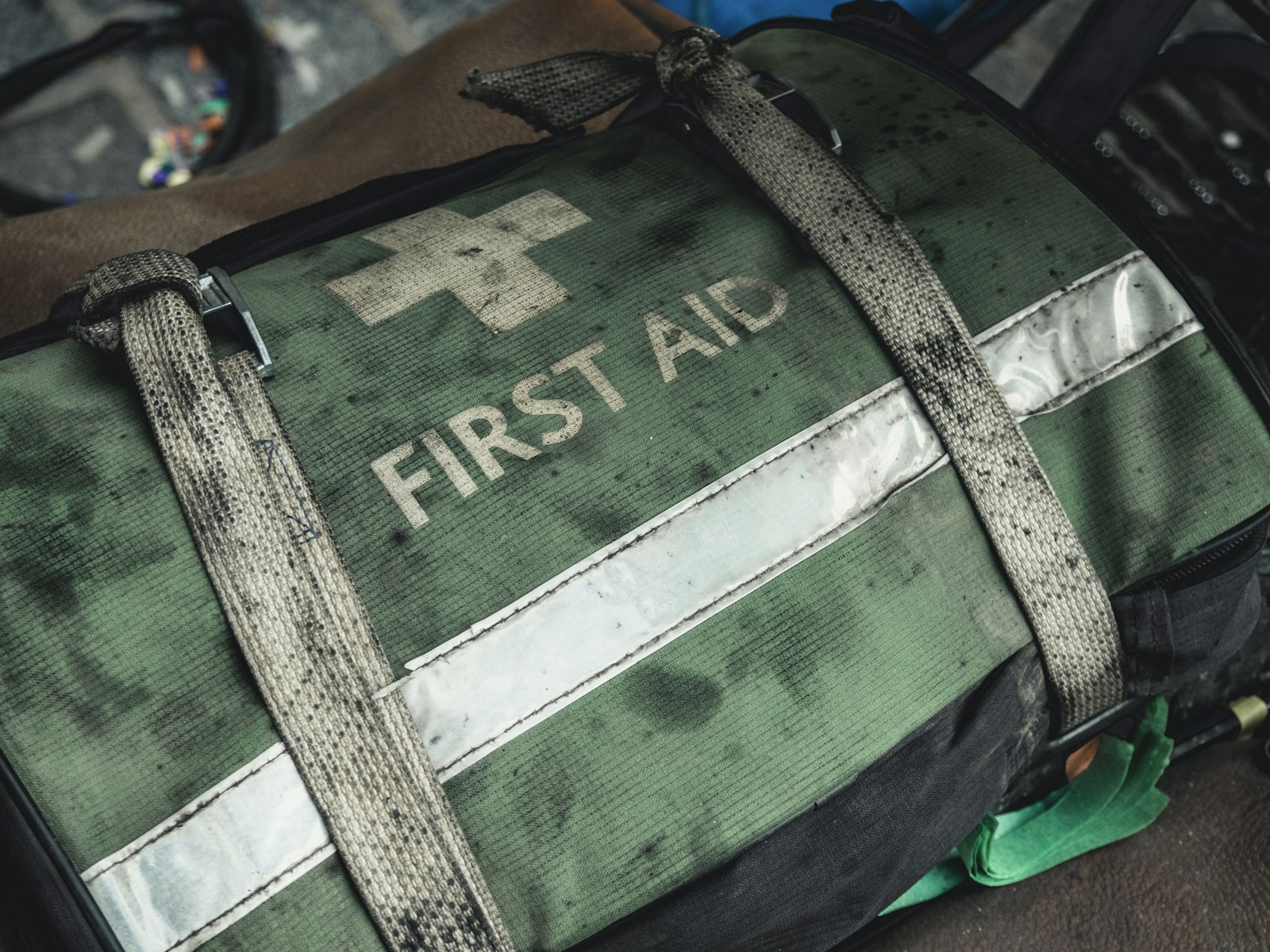
If someone has been stabbed or is bleeding heavily, call 999 or 112, put the phone on speaker and press firmly on the wound with whatever you have, such as a clean cloth, a scarf or clothing. Keep pressing until the ambulance arrives. If a knife or other object is still in the wound, leave it in and press around it. Keep the person lying down and warm, and only help if it is safe to do so.
Updated 12 October 2026 · Sources: St John Ambulance, British Red Cross, ONS, NHS ambulance services
Call 999 or 112 and put the phone on speaker so your hands are free to press on the wound. If the attacker may still be nearby, move away first: your own safety comes first. The call handler will talk you through what to do.
Heavy bleeding in four numbers
Figures from ONS Crime in England and Wales, year ending March 2026 (published 23 July 2026), and Oxford City Council’s bleed kit guidance (“severe bleeding can lead to death within minutes”). Knife crime is falling, but knowing what to do still saves lives. Read what the latest knife crime figures mean for you.
What should you do if someone has been stabbed?
Make sure it is safe, then call 999 or 112 on speaker. Press firmly on the wound with a clean cloth or clothing, or ask the injured person to press on it themselves. Don’t pull out anything stuck in the wound. Keep pressing until paramedics take over, keep the person lying down and warm, and watch for signs of shock.
First aid for heavy bleeding, step by step
1. Check it is safe and call 999
2. Press firmly on the wound
3. Leave any object in place
4. Lie them down and keep them warm
5. Keep pressing until help takes over
Steps based on St John Ambulance severe bleeding guidance and British Red Cross advice for someone who has been stabbed. A first aid course teaches the hands-on skill; this guide is a reminder, not a replacement.
Should you take the knife out?
No. St John Ambulance and the British Red Cross both say to leave any embedded object in place, because it may be plugging the wound and removing it could make the bleeding much worse. Press firmly on either side of the object to push the edges of the wound together, and let paramedics deal with it when they arrive.
What should you tell 999?
Say you need an ambulance and give the exact location first. Then tell the call handler where on the body the wound is, how heavily it is bleeding, whether the person is awake and breathing, and whether there is still any danger, such as the attacker nearby. Keep the line open on speaker and follow their instructions. Our guide explains how to tell 999 exactly where you are.
What are the signs of shock?
Shock can follow heavy blood loss and can be life-threatening. The British Red Cross lists signs such as pale skin, feeling cold and dizziness. Keep pressing on the wound, call 999 if you haven’t already, lay the person down with their legs raised above heart level, reassure them and cover them with coats or a blanket to keep them warm.
Do and don’t
What is a bleed control kit?
A bleed control kit is a public emergency kit, often in a locked street cabinet, with items such as tourniquets, gauze, trauma dressings, chest seals and gloves. Many councils and ambulance services are installing them. When you call 999 about life-threatening bleeding, the ambulance service can direct you to the nearest kit, give you the cabinet code and talk you through using it.
Who to call: a quick guide
▲ red = act now, ▬ amber = soon or when safe, ▼ green = support. Crimestoppers says it is not the police and to dial 999 for urgent help. See 999 or 101? How to report a crime and how Crimestoppers works.
Can you get in trouble for helping?
It is very unlikely. In England and Wales, the Social Action, Responsibility and Heroism Act 2015 asks courts to take into account that someone was acting to help in an emergency. Pressing on a wound and calling 999 is exactly what first aid organisations advise. If you are worried about infection, use gloves or a plastic bag as a barrier, or ask the person to press on the wound themselves.
Frequently asked questions
Only if you have one and know how, or the 999 call handler tells you to. St John Ambulance says that if firm pressure doesn’t control the bleeding, the call handler may ask you to improvise a tourniquet with a triangular bandage, belt or tie and will guide you through it. Firm pressure comes first.
Keep pressing. The British Red Cross says to add a fresh layer on top and keep the pressure firm. St John Ambulance adds that you can replace the pad with a new one and press firmly again to control the bleed.
Learn the next steps too: how to do CPR and use a defibrillator if someone stops breathing, the recovery position for someone unresponsive but breathing, and the latest knife crime figures. Not sure which number to ring? See which number should I call.
Sources
- St John Ambulance: severe bleeding
- British Red Cross: how to help someone who’s been stabbed
- British Red Cross: bleeding heavily
- Full Fact: you shouldn’t put a tampon in a stab wound (quoting St John Ambulance and the British Red Cross)
- ONS: Crime in England and Wales, year ending March 2026
- Oxford City Council: lifesaving bleed kits (August 2026)
- South Western Ambulance Service: bleed kit partnership
- Crimestoppers: give information anonymously
- Victim Support
General first aid information, not medical advice, and no substitute for a first aid course. In an emergency, always call 999.
Keep reading
When something goes wrong, get your circle there fast
Safety App UK lets you trigger an SOS by button or shake, or automatically in higher-crime zones, sending your live location and live video to a trusted circle so the people you choose know where you are. Its live safety map, built from police data and community reports, shows police stations and Ask for Angela venues and helps you plan safer routes home. It does not call the emergency services, so if someone is hurt, always dial 999 first. Free for 7 days, then £2.99 a month. For ages 16+.