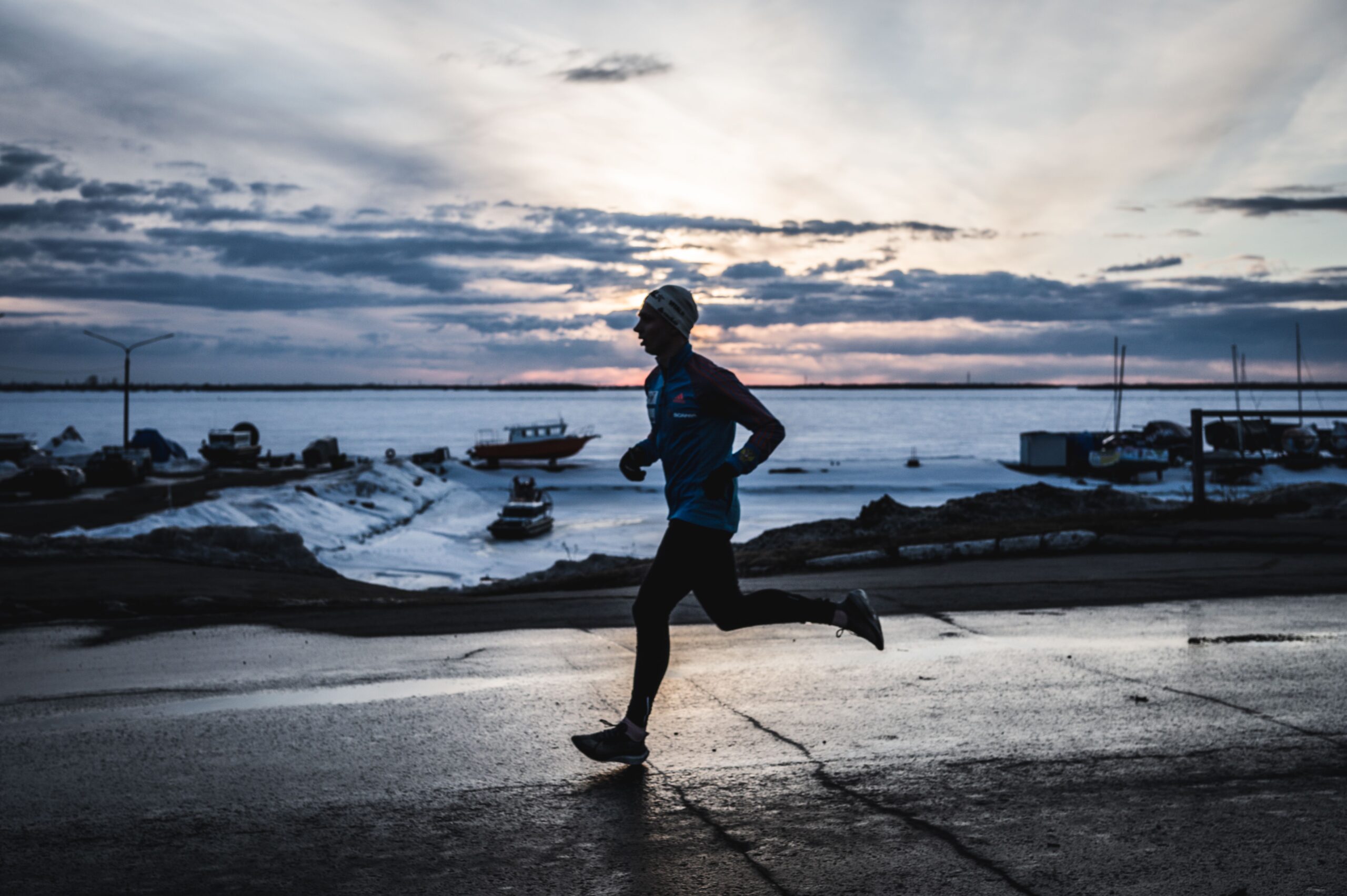
To run or cycle safely after dark, make yourself visible with lights and reflective kit, choose lit routes you know, keep your hearing free, and tell someone where you are going or share your location live. In the UK, a bike ridden between sunset and sunrise must have a white front light, a red rear light and a red rear reflector, plus amber pedal reflectors on bikes made after 1 October 1985. For running at night safety, share your run live with Check In on iPhone, Safety Check on Android or Strava Beacon; the clocks go back on 25 October 2026.
Updated 2 October 2026 · Sources: The Highway Code (GOV.UK), GOV.UK, Apple and Google support, Strava Support, Avon and Somerset Police, PDSA
Share your route: before, during and after a dark run
1. Before you go
2. Share it live
3. On the run or walk
4. Home safe
After-dark kit: runners vs cyclists
Is it safe to run alone at night?
Many people do, and you can reduce the risks. Pick well-lit, busier routes you know, avoid parks, towpaths and trails after dark, and vary your route and time so you aren’t predictable. Tell someone where you are going and when you expect to be back, or share your live location. If you feel uneasy, head for a busy street or an open shop, and call 999 if you are in danger.
Avon and Somerset Police give the same running safety advice for night runs: vary your route, use just one earphone so you can hear what is around you, and in the dark wear reflective clothing and carry a torch, such as a hands-free head torch.
Which side of the road should I run on?
Use the pavement whenever there is one. Where there is no pavement, the Highway Code advises walking on the right-hand side of the road, facing oncoming traffic, so you can see vehicles coming. Keep close to the edge, and cross to the other side before sharp right-hand bends so drivers can see you sooner. Runners should follow the same advice.
What lights does a bike need at night in the UK?
Between sunset and sunrise, your bike must have a white front light, a red rear light and a red rear reflector. Bikes made after 1 October 1985 also need amber reflectors on the front and back of each pedal. Flashing lights are allowed if they meet the rules, but a steady front light is better on unlit roads. The Highway Code also recommends light-coloured or fluorescent clothing, and reflective clothing or accessories in the dark.
How can I share my run live?
On iPhone, start Check In in Messages with a timer. On Android, schedule a Safety Check in the Personal Safety app: if you don’t respond within 60 seconds, your location is shared with emergency contacts. Strava Beacon texts up to three safety contacts a live link that opens in any browser. More options: how to share your live location and Emergency SOS set-up.
Safety tips for walking the dog after dark
Make sure drivers can see both of you. The vet charity PDSA suggests a reflective or LED collar, bright or high-visibility clothing, and a short, strong lead near roads. Avon and Somerset Police advise varying your route, using one earphone and carrying a torch. Stick to lit paths, check the area on our crime map, and follow our walking alone at night checklist.
When do the clocks go back in 2026?
The clocks go back one hour at 2am on Sunday 25 October 2026, when the UK moves from British Summer Time to Greenwich Mean Time, according to GOV.UK. After that, evening runs and dog walks start in the dark sooner, so get your lights, reflective kit and live sharing ready. Our guide to when crime is most likely by hour and season explains how risk changes after dark.
Frequently asked questions
A small personal alarm is legal and light to carry. Read what you can legally carry for self-defence before buying anything else.
Change direction, head for people and lights, and call 999 if you feel in danger. See what to do if you’re being followed.
Many running apps and sports watches have a live-tracking feature you can switch on and share with chosen contacts. Check the privacy settings so your home address isn’t visible on public activity maps.
Sources
- The Highway Code: Rules for pedestrians
- The Highway Code: Rules for cyclists
- Apple Support: Check In
- Google: Emergency help on Android
- GOV.UK: When do the clocks change?
- Strava Support: Strava Beacon
- Avon and Somerset Police: Keeping yourself safe
- PDSA: Protecting pets as evenings get darker
General safety information, not legal advice. In an emergency, always call 999.
Keep reading
Run or ride with someone watching your back
Safety App UK lets people you trust follow your route live, plans safer routes, and sends them an SOS with your location and live video in one tap or with a shake of your phone. Free for 7 days, then £2.99 a month.